

Executive Summary :
Electricity demand in the United States is accelerating at a pace not seen in decades. Data center expansion, AI compute growth, industrial reshoring, and electrification policies are driving structural increases in power consumption. At the same time, reserve margins are tightening, grid interconnection backlogs are expanding, and skilled labor shortages are constraining project execution. The result is a new competitive landscape where schedule certainty and integration speed matter as much as equipment capability. As power systems grow more complex with distributed generation, higher-density loads, and increased protection requirements, simplifying what can be simplified has become a strategic imperative. Modular, integrated electrical solutions reduce field dependency, compress commissioning timelines, and improve execution reliability. In the electrification decade ahead, organizations that engineer simplicity into complexity and invest in scalable production capacity will define competitive advantage.
Demand Is Accelerating Faster Than Infrastructure
The United States is entering a new phase of electrification. According to the U.S. Department of Energy (DOE), data center electricity consumption, which was 4.4% of total U.S. electricity in 2023, is projected to rise to 12% by 2028. In terms of actual data center power usage, the increase has been from 58 TWh in 2014 to 176 TWh in 2023, with the figure likely to reach 580 TWh by 2028. In all this, AI-related compute demand is the primary driver of this ever-increasing need for power at data centers. As generative AI models grow in size and complexity, electrical density per rack continues to rise, placing additional strain on distribution systems. McKinsey & Company forecasts that AI processes in data centers will require an additional 125 GW of capacity between 2025 and 2030, requiring about $5.2 trillion in investment. This data highlights the need for a significant increase in power infrastructure in the U.S. and to have it running as quickly as possible.
“The expectations for large and medium-sized data centers continue to increase as the world requires more data and more ways to calculate and utilize algorithms,” says John Hayter, Chief Revenue Officer at Panelmatic. “Intelligence has power when it comes to the world economy, and data centers provide that ability.”
Data centers are only part of the story. Manufacturing reshoring initiatives, electric vehicle production, renewable integration, and population migration into high-growth regions are adding incremental load. Power demand across these sectors would need to be met to achieve sustainable development.
The Workforce Constraint Few Are Discussing
While public discourse often focuses on generation capacity and transmission interconnections, another constraint is emerging: labor.
“Beyond the normal headlines about power availability, land availability, and interconnections to the grid, there is also a significant concern about whether there is enough workforce to install and commission these projects,” Hayter notes.
According to the U.S. Bureau of Labor Statistics, the 2022 median age of electricians was approximately 41 years, with over 20% of these professionals nearing retirement age. In addition, not enough apprentices are being trained to replace the retirees. A 2021 Tallo survey found that fewer than 17% of Gen Z high school and college students were interested in careers in skilled labor. This is not just a problem for the future; companies in the industry are already feeling the heat. The 2025 Workforce Survey by Associated General Contractors of America (AGC) found that 91.9% of positions that firms are finding difficult to fill involve craft, including electricians.
“One of the biggest concerns customers have today is being able to meet scheduled timelines and stay on budget,” Hayter says.
This constraint compounds execution risk. Even when equipment is procured on time, field installation, testing, and commissioning are increasingly dependent on limited skilled labor pools. As project scale grows, particularly in data centers and utility upgrades, the manpower intensity of traditional field-built systems becomes a bottleneck.
The End of Reserve Capacity Assumptions
For decades, grid planning relied on reserve margins sufficient to absorb incremental load growth. However, the increasing demand for power infrastructure is narrowing that buffer.
“Historically, there was enough reserve capacity built into the grid to meet new loads,” Hayter explains. “That assumption no longer reflects today’s demand.”
Recent reliability assessments from the North American Electric Reliability Corporation (NERC) indicate declining reserve margins in several regions, with certain markets projected to fall below recommended thresholds by the year 2029. In addition, interconnection backlogs now exceed 2,600 GW nationally, with the average waiting time for connecting new power projects to the national grid spanning five years or more, delaying generation projects that could alleviate the strain.
Utilities are being asked to increase capacity while maintaining reliability and resiliency, often within regulatory and permitting environments that slow deployment. In parallel, large-load customers are exploring on-site generation and hybrid energy models to secure supply certainty. The result is a system under simultaneous expansion and strain.
The buck stops with the regional grid operators, who manage these interconnection queues. Their goal now should be to eliminate complex and time-consuming procedures that stifle new projects from safely and reliably integrating into the grid.
Rising Equipment Lead Time Is the New Baseline
Meeting new load requirements often increases system complexity, and getting the necessary equipment is taking too much time.
Distributed generation, battery storage, microgrids, advanced protection schemes, and redundant distribution paths are becoming standard components of large-scale electrical infrastructure. Medium-voltage switchgear lead times have extended to approximately 26 to 32 weeks, which is significantly higher than pre-COVID levels of 12 to 16 weeks. Some industry reports indicate even longer, more extreme delays, with certain switchgear turnaround times averaging 50 to 70 weeks for specific types like Gas-Insulated Switchgear. Moreover, transformer supply constraints persist across multiple voltage classes. Wood Mackenzie estimates this supply deficit at 30% and 6% for power transformers and distribution transformers, respectively, based on annual supply and demand estimates.
As the demand for power infrastructure increases, it is important to note that more equipment means more integration points. More integration points mean more coordination between mechanical, electrical, protection, and control systems. Commissioning complexity rises accordingly. So, what is the solution? Beyond increasing manufacturing capacity to reduce lead times, reducing avoidable coordination risk is essential to making the process more efficient.
Simplification as Competitive Strategy
As dependence on the national grid seems uncertain in the near future, one lever available to owners and developers is modular integration.
Prefabricated electrical buildings and integrated control houses allow switchgear, relay panels, protection systems, and mechanical components to be assembled, wired, and tested in controlled manufacturing environments. Industry studies suggest off-site prefabrication can reduce field labor hours by approximately 3% and compress commissioning schedules by 50%.
Factory integration also improves safety performance and quality consistency. Controlled environments reduce exposure to weather delays, minimize rework, and streamline inspection cycles. By transferring integration complexity from the field to production facilities, project teams can mitigate labor dependency and reduce schedule variability.
“What we provide are modular, integrated solutions that reduce the amount of time it takes in the field to get a power system up and running,” Hayter says.
This is not merely an efficiency tactic. It is risk management.
As large-scale electrification projects compress timelines, modular integration becomes a way to convert uncertainty into throughput.
Capacity Discipline in a Growth Cycle
Simplification alone is insufficient if manufacturing capacity cannot scale.
Panelmatic, founded in 1957, historically focused on industrial control panels. In recent years, the company expanded into relay panels, control houses, and medium-voltage distribution solutions aligned with utility and data center growth.
“We are investing heavily in our people, processes, and facilities to meet the growth and electrification demands of the future,” Hayter says.
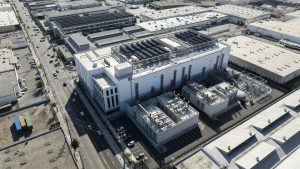
In 2025, the company expanded its Houston operations with a 728,000-square-foot facility designed for vertical integration, from raw steel processing through assembly of fully integrated electrical buildings. The objective is throughput optimization.
“In 2027, we will begin to realize the full result of the investments we’re making today.” Hayter notes.
Vertical integration reduces supply chain exposure. Process optimization improves production flow. And dedicated capacity enables faster start-to-finish project cycles.
In a constrained market, capacity is a strategy.
The Electrification Decade Ahead
Utilities, data center developers, industrial operators, and EPC firms are navigating a landscape defined by acceleration and constraint. Demand curves are rising. Labor pools are tightening. Reserve margins are narrowing. System complexity is increasing.
Organizations that respond by layering more complexity onto field execution models may encounter friction. Those that simplify integration, compress field dependency, and invest ahead of demand may gain a structural advantage.
The next decade of electrification will not be defined solely by megawatts deployed. It will be defined by who can deploy them predictably and quickly.
Speed matters. Simplicity matters. Discovering the right partner matters the most.